
Why your nervous system needs both fire and stillness — what yoga knew before science had a name for it
Learning to rest is only half the practice.
The other half is learning how to come alive again.
Yoga has names for both. And understanding them changed the way I teach — and the way I experience — nervous system regulation entirely.
We live in a world that has become very good at telling sensitive, exhausted women to slow down. To rest more. To do less. To soften, receive, restore. And that guidance is not wrong — for many women, the capacity to genuinely rest has been so eroded by years of over-giving that learning to slow down is genuinely radical and necessary work.
But there is something missing from that conversation. Something yoga has understood for thousands of years and that nervous system science is only now beginning to articulate clearly.
A person who only knows how to rest is not regulated.
They are incomplete.
Real regulation — the kind that leads to genuine aliveness, not just the absence of exhaustion — requires two energies. The capacity to soften, yes. And the capacity to come alive again. Stillness and fire. Rest and vitality. The lunar and the solar.
Both. Always both.
What yoga understood first
Ancient yogic philosophy describes two fundamental energies that move through all living things — and through the human body specifically.
Solar energy — known in Sanskrit as Surya — is warming, activating, energising. It is the energy of movement, of engagement with the world, of fire in the belly and clarity in the mind. It is what gets you out of bed with genuine motivation rather than obligation. What makes creativity flow. What allows you to be fully present and engaged with your life rather than simply managing it.
Lunar energy — Chandra — is cooling, receptive, restorative. It is the energy of rest, of integration, of the body digesting what it has experienced and preparing for what comes next. It is what allows deep sleep, genuine restoration, the quiet pleasure of being still without needing to be anywhere else.
In a balanced system, these two energies exist in conversation. They move and respond to each other — activation followed by rest, effort followed by integration, fire followed by stillness. The system is not stuck in either state. It flows.
But chronic stress, over-giving, and years of running on empty do not just deplete one energy. They disrupt the conversation between the two. They leave us stuck — either chronically activated and unable to rest, or chronically flat and unable to generate the warmth and vitality that makes life feel worth living.
And here is what most wellness approaches miss: the solution is not simply more of one or the other. It is the restoration of the conversation itself.
When solar energy goes missing
I want to tell you something personal here, because I think it is more useful than any theory.
There was a period in my life when I felt flat. Not anxious, not wired — just quietly switched off. Low energy. Low motivation. A kind of grey quality to everything that I could not quite name or shake.
My instinct — as a yoga teacher, as someone who understood the nervous system — was to do more slow practices. More restorative yoga. More meditation. More stillness. Because that is what the exhaustion seemed to be asking for.
My teacher at the time pointed out something that stopped me completely.
In that state, you are feeding the flatness with more flatness. What your system actually needs is fire.
He was right. What I was experiencing was not the result of too much activation — it was the result of too little. The solar energy had gone quiet. And by meeting it with only lunar practices, I was reinforcing the very state I was trying to move out of.
What I needed was not more rest. I needed Kapalabhati — the skull-shining breath, rapid and rhythmic, generating heat and clearing stagnation. I needed movement that was vigorous rather than gentle. I needed the solar half of the practice that I had been quietly avoiding.
And the same principle works in reverse — which is equally important and often even harder to apply.
When lunar energy is what is needed
For many of the women I work with, the presenting problem is the opposite. Wired. Activated. Running too hot. The nervous system caught in a high-alert state that cannot seem to find its way down.
And here is the thing that is counterintuitive but crucial: if someone is already activated — already running a stress response, already caught in the sympathetic spiral — and you take them straight into a fast, activating breathwork practice, you are not helping. You are adding fuel to a fire that is already burning too intensely.
What they need is the lunar half. Chandra Bhedana — left nostril breathing, cooling and receptive. Brahmari — the humming bee breath, the vibration of sound moving through the body, activating the vagal brake and inviting the system to soften. Slow, intentional movement that signals safety rather than urgency.
Even when — especially when — the activated nervous system resists it. Because a system running hot often experiences slowing down as threatening. The body has learned that stillness is dangerous. Teaching it otherwise, gently and consistently, is the work.
This is why the same practice does not work for everyone. And why reading the state of the nervous system — understanding which direction it needs to move — is as important as knowing the practices themselves.
The science that confirms what yoga already knew
Modern nervous system science divides the autonomic nervous system into two primary branches.
The sympathetic nervous system — activation, mobilisation, the capacity to respond to demands. This is not the enemy. This is what allows you to think clearly under pressure, move decisively, engage fully with your life. The problem is not sympathetic activation — it is sympathetic activation that cannot switch off.
The parasympathetic nervous system — restoration, digestion, integration. The body's capacity to rest, repair, and receive. Again, not a destination in itself — a necessary counterpart to activation.
A regulated nervous system is not one that lives permanently in the parasympathetic state. It is one that can move fluidly between the two — activating when the moment calls for it, and returning to rest when the activation is no longer needed.
Yoga called this solar and lunar. Science calls it sympathetic and parasympathetic.
Same truth. Two languages. Thousands of years apart.
And the practices that yoga developed to work with these energies — pranayama, movement, sound — are not mystical in the way that word is sometimes used dismissively. They are precise, embodied tools for influencing the autonomic nervous system. Kapalabhati increases sympathetic tone and clears stagnation. Chandra Bhedana and Brahmari activate the vagal brake and invite parasympathetic response. Surya Bhedana — right nostril breathing — warms and energises. Each practice is doing something specific. Yoga knew this experientially long before we had the language to explain the mechanism.
Sound as solar and lunar
The same principle extends beyond breath into sound — which is where my own work lives most fully.
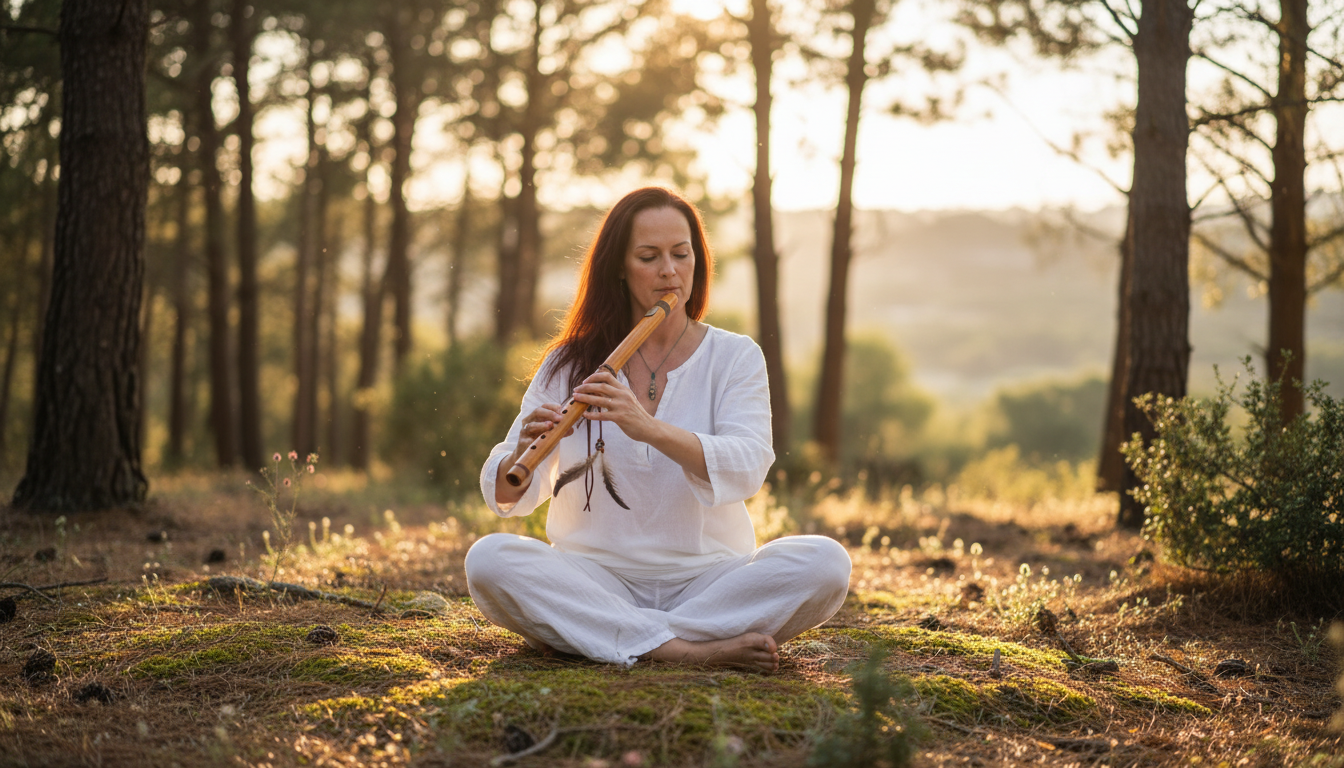
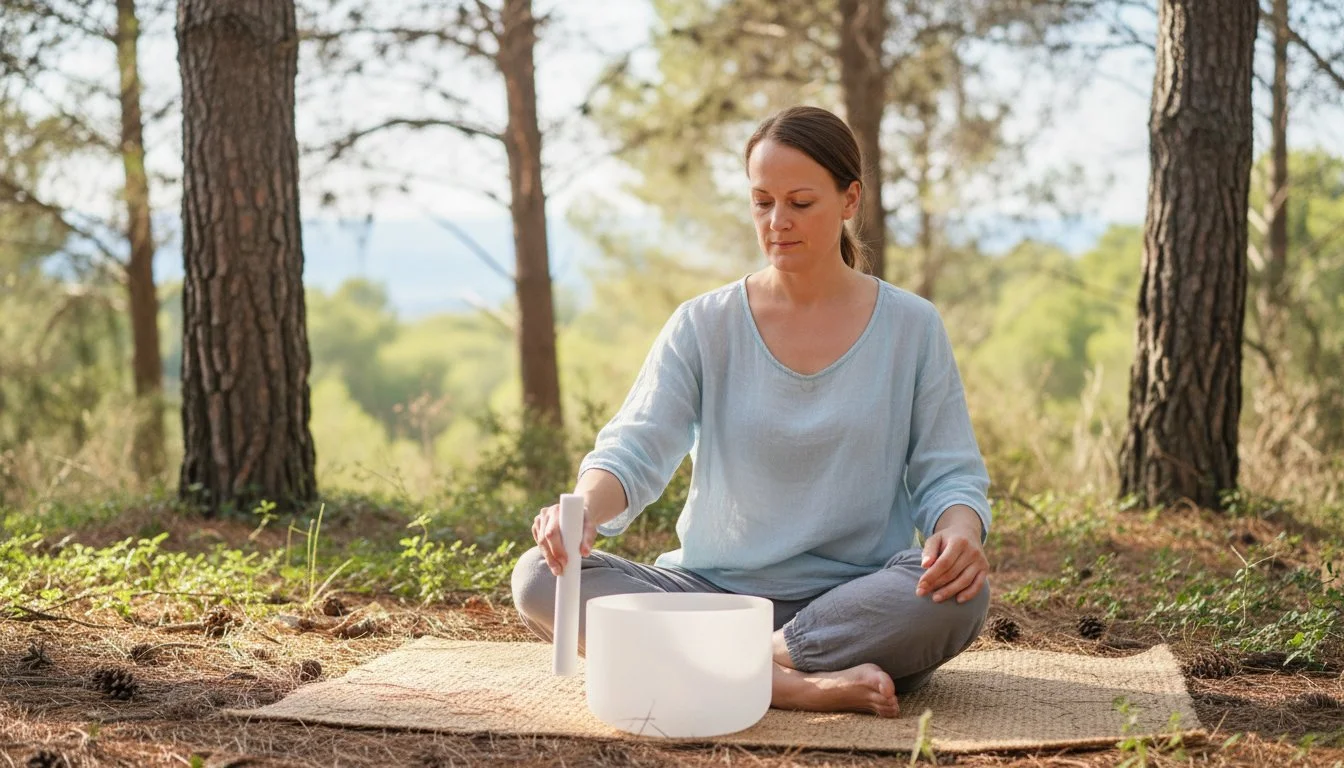
Sound is not simply relaxing or stimulating in some general sense. Certain sounds call the body back into presence and aliveness. Others invite it into deep receptivity and rest. The shamanic drum, with its rhythmic pulse, can move a system out of flatness and back into engagement — activating without agitating, calling the body's attention without alarming it. The flute, with its long sustained tones and breath-like quality, does something different — it seems to give the nervous system permission to exhale. To soften. To receive.
I use these instruments intentionally, in the same way I use pranayama — reading the state of the room, or the individual, and choosing the sound that will move the system in the direction it needs to go. Not always toward calm. Sometimes toward fire. Sometimes toward the conversation between the two.
This is what makes sound work more than ambient background music. It is a precise tool for working with the body's two fundamental energies — if you know how to use it.
The root of Regulate → Reconnect → Reignite
Everything I have described here is the philosophical foundation of how I work.
Regulate — creating enough felt safety for the nervous system to soften. This is the lunar work. The slowing, the receiving, the building of a baseline that the body can trust.
Reconnect — what becomes possible in that safety. When the system is no longer spending all its resources on threat response, something opens. Sensation returns. Presence returns. The capacity to actually feel your own life rather than manage it from a slight distance.
Reignite — the solar energy returning. Not forced, not performed, not manufactured through caffeine or willpower or pushing through. But the genuine return of vitality that happens when the nervous system finally has enough safety to let the fire back in.
This sequence is not arbitrary. It mirrors what yoga has always known: that stillness must come before fire, that safety must precede activation, that you cannot sustainably reignite what has not first been allowed to rest.
But it also insists on what so much wellness culture forgets: that rest is not the destination. Aliveness is. The quiet fire that exhaustion had been covering over — that was never gone. It was just waiting for enough stillness to come back safely.
What this means for your practice

If you have been doing all the gentle, restorative, calming things and still feel flat, depleted, or somehow switched off — you may be missing the solar half. Your system may need activation before it can find genuine rest. Not more stillness. Carefully chosen fire.
If you are chronically wired, activated, unable to switch off — you may be avoiding the lunar half. Your system needs the cooling, receptive practices, even when — especially when — everything in you resists slowing down.
If you want to begin building the lunar foundation — the felt safety and genuine rest that makes everything else possible — that is exactly what The Regulation Ritual is designed for.
It is a short daily audio practice focused on grounding, breathwork, and deep restoration. The stillness that comes before the fire. The safety that allows vitality to return.
Not the whole journey. But the place to begin it.
The waitlist is open. I would love to have you there.
Join here: soulbreathyoga.com/regulation-ritual
Your nervous system does not need more calm. It needs to remember how to move between fire and stillness. That capacity is already in you. We are just waking it back up.