
What Is Yoga Nidra — and How It Supports Deep Rest and Well-Being
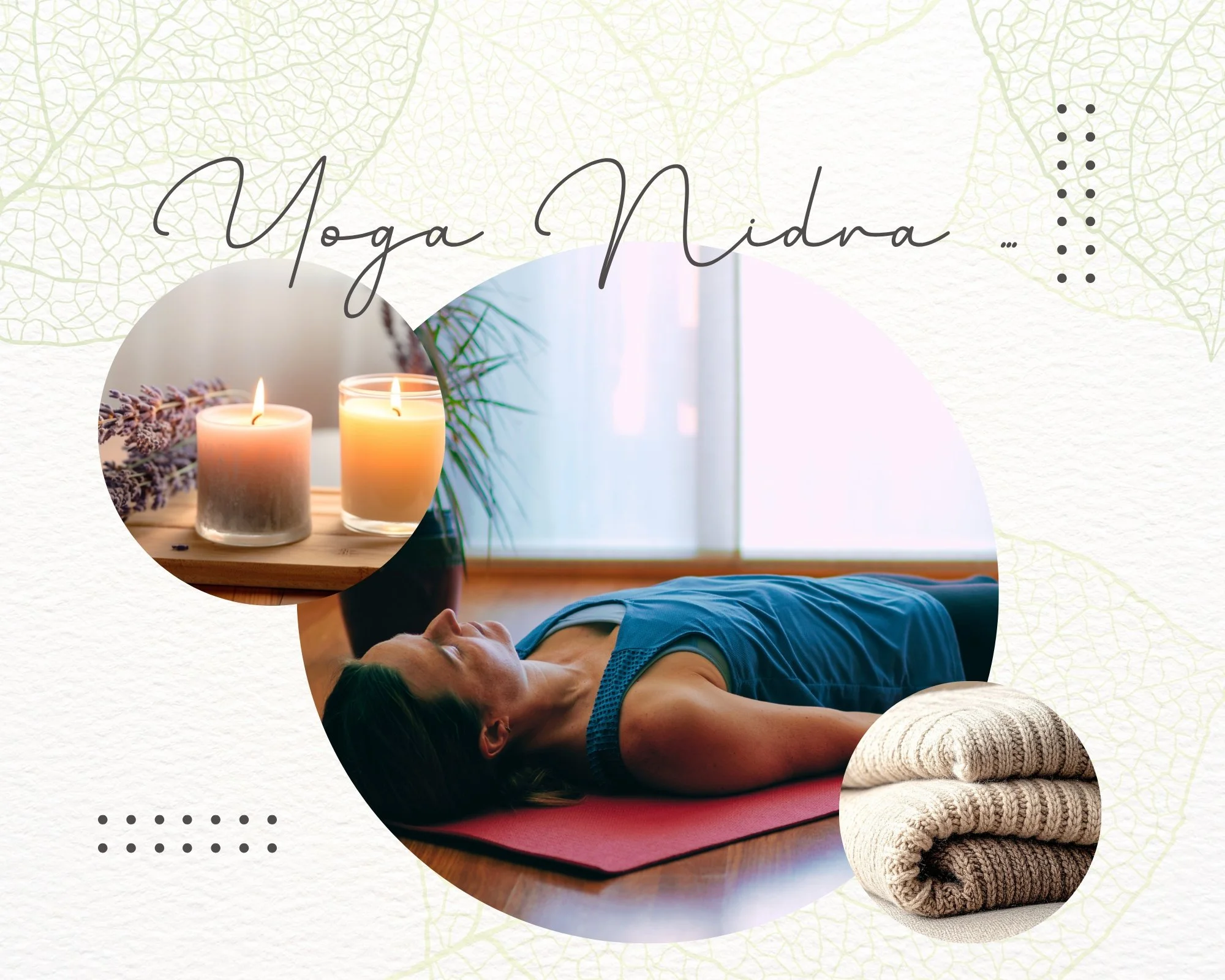
In a world that moves quickly and rarely pauses, many of us live in a state of constant activation. Even when we rest, our nervous system often remains alert, busy, or overstimulated. Sleep may come, but true restoration can feel elusive.
Yoga Nidra offers a different kind of rest — one that goes deeper than sleep, without effort or striving.
It is an invitation to consciously rest, to listen inwardly, and to reconnect with a sense of clarity and ease that already exists beneath the surface of daily life.
What Is Yoga Nidra?
Yoga Nidra is often translated as “yogic sleep,” but it is not sleep in the conventional sense.
It is a guided practice of deep relaxation in which the body rests fully while awareness remains gently awake. Practiced lying down, Yoga Nidra leads you into a state between wakefulness and sleep — a liminal space where the nervous system can truly settle and regenerate.
Unlike many forms of meditation that ask for focus or concentration, Yoga Nidra is receptive in nature. You are not asked to “do” anything. You are guided step by step, allowing the body and mind to soften naturally.
This makes Yoga Nidra accessible to people of all backgrounds, including those who find seated meditation challenging or who feel easily overwhelmed by effort-based practices.
Why Deep Rest Matters
Modern life places continuous demands on our attention, our nervous system, and our emotional resources. Over time, this can lead to chronic stress, fatigue, anxiety, and a sense of disconnection from ourselves.
Yoga Nidra supports well-being by offering:
Deep nervous system regulation
The practice gently shifts the body from a state of sympathetic activation (fight-or-flight) into parasympathetic rest-and-digest.Rest without effort
You don’t need to concentrate, control the breath, or maintain posture. The body is supported, and rest unfolds naturally.Mental clarity and emotional integration
As the mind settles, patterns of tension and habitual thinking can soften, allowing space for insight and clarity.A sense of safety and grounding
The structure of the practice helps create a felt sense of safety, which is essential for genuine relaxation and healing.
For many people, even a single Yoga Nidra session can feel more restorative than hours of ordinary sleep.
Yoga Nidra as a Space of Inner Listening
Beyond relaxation, Yoga Nidra creates a unique inner landscape — a space where listening becomes possible.
As the body rests deeply, awareness turns inward. In this state, we are often more receptive to subtle sensations, emotions, and intuitive knowing. This is why Yoga Nidra is traditionally associated with Sankalpa — a heart-felt intention.
A Sankalpa is not a goal or a to-do list. It is a simple, clear intention that arises from a deeper layer of awareness — something you are ready to embody or invite into your life.
Rather than forcing change, Yoga Nidra allows intention to be planted gently, when the mind is quiet and the nervous system is receptive. In this way, transformation happens through alignment rather than effort.
The Role of Sound in Yoga Nidra
When integrated with care, sound can support Yoga Nidra by deepening the sense of presence and containment.
Subtle sonic elements — such as sustained tones, resonant instruments, or gentle vibrations — can help the body relax more fully and support the transition into deeper states of rest. Sound is not used to stimulate or entertain, but to hold space and invite listening.
In a Yoga Nidra context, sound works best when it is simple, intentional, and spacious — allowing silence to remain an active part of the experience.
Who Is Yoga Nidra For?
Yoga Nidra is suitable for:
people experiencing stress, fatigue, or burnout
those seeking deeper rest and nervous system regulation
individuals curious about meditation but unsure where to begin
practitioners looking to complement more active practices
anyone longing for clarity, grounding, and inner spaciousness
No previous experience with yoga or meditation is required.
All that is needed is a willingness to rest and receive.
An Invitation to Rest and Reorient
Yoga Nidra is not about becoming someone else or fixing what is wrong. It is about remembering how to rest, how to listen, and how to reconnect with what is already present beneath the noise.
In a time that often values productivity over presence, choosing to rest consciously is a radical and nourishing act.
Whether practiced regularly or occasionally, Yoga Nidra can become a powerful resource — a place to return to when life feels full, unclear, or demanding.
It is an invitation to pause, to settle, and to orient yourself from within.
Continuing the Journey with Yoga Nidra
If this practice resonates with you, you’re warmly invited to continue exploring Yoga Nidra in a deeper way.
If you’re curious to experience guided Yoga Nidra for deep rest and well-being, I will soon be sharing recorded Yoga Nidra meditations as well as live Yoga Nidra and sonic experiences, both in person and online.
If you’d like to stay connected and be the first to hear about upcoming sessions, new recordings, and future offerings, you can subscribe to my newsletter below.
It’s a quiet space — shared with care — where I send reflections, invitations, and updates from time to time.
You’re welcome to join whenever it feels right.